He who hears the shema drinks the shekar!

Sunday, March 1, 2009

Theonomy, Ethics, and Perspectivalism

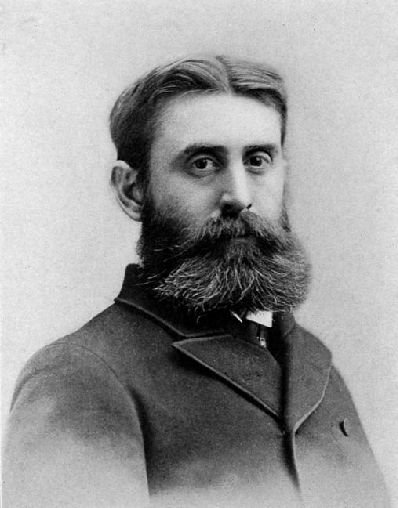
NB: The following was discussion paper penned by the late Meredith Kline. Since I over the years have received numerous questions regarding Christian ethics, Theonomy, and perspectivalism. I don't wish enter a full-blown discussion of Prof Frame's perspectivalism, but I merely submit this in the interest of (a) highlighting one aspect of the discussion and (b) posting Dr. Kline's thoughts on the matter.

__________________________________________________________


Meredith G. Kline
28 February 1986
Westminster Theological Seminary in California


After our faculty forum on theonomy I thought a follow-up paper would be useful, particularly to treat the opening sections of the discussion-guide provided by John Frame, which were by-passed at the forum. I also thought it would be appropriate to communicate with Vern Poythress, whose three tapes on theonomy were among the source materials for the forum, especially since I had made some criticisms of his approach, even though appreciating his contribution to the discussion along biblical-theological lines and the way he eventually comes down in clear opposition to the radical conclusions of theonomic politics. These two objectives have been combined in this one response-paper to save some time and effort by avoiding inevitable repetitions. Hopefully this paper may serve as a stimulus to our continued study of the issues together.

At the forum I stressed the importance of starting with something that is indisputably held by theonomists and is, moreover, a distinctive and climactic tenet for them, namely, their contention that it is a function of the state to suppress and eliminate those who practice false religions. In my judgment, to impose such a role on the State would be in effect to countermand the great commission. As I see it, this reconstructionist program contradicts the essential biblical ethos and ethic of the church in this present world. Theonomists disagree - they see this program as the fulfillment of their millennial aspirations. One can take a stand with one side or the other in this dispute but what one cannot do is pass off the conflict as just a matter of varying emphases, as just a relative difference of position on some continuum. Clearly the difference is substantive, a difference not of degree but total contrast. It is not simply a matter of minor disagreement as to how to apply some general principle in a given situation. It is not a matter of some general principle of justice at all, but rather of the particular, precise functions that divine revelation assigns to specific institutions - theocracy, State, church. The defining of the nature, functions and historical mission of these institutions constitutes a major element in the content of biblical law, each covenantal corpus of law being indeed institutionally specific. And dividing theonomists sharply from their Reformed critics is a radical difference of judgment as to the functions appointed by the Scriptures to the several institutions.

Turning to Frame's discussion-guide he starts with the assertion that the Mosaic law, including its penal sanctions, had the functions (1) of republishing "the creation ordinances and the Noahic and Abrahamic covenant stipulations" and (2) of applying these "principles" to the new situation introduced by the exodus, with its cultural and redemptive-historical differences from what went before. Then, on the basis of this interpretation of the Mosaic law, he concludes that there is both continuity and discontinuity between the Mosaic law and what preceded and follows it, that accordingly total continuity or total discontinuity is ruled out, and that the differences between Bahnsen and Kline are perforce only relative differences as to the degree of continuity or discontinuity recognized by each.

It is Frame's starting point that must be challenged, that is, his biblical-theological conclusion that the several promulgations of divine stipulations are to be identified as each a republication of its predecessors). I am, of course, concerned to contest the soundness of the biblical-theological position in itself, but I also want to call attention to how this starting assumption decisively affects, delimits and controls all that follows.

Frame's republishing approach should not be adopted in the first place because it entails a seriously defective view of the several divine covenants. It misconstrues the relationship of the successive economies in the administration of God's rule over the world by obscuring if not obliterating the real differences (especially as to the nature and functions of the institutions defined in the covenants) that obtain between the covenant of creation and the covenant of common grace, between the latter and the redemptive covenants, and between the Mosaic Covenant and previous and following redemptive covenants. Of particular relevance, it is oversimplification to the point of falsification to identify the Mosaic Covenant as a republication of the stipulations of the previous divine covenants recorded in Scripture. Though I am only stating this dogmatically here, I have sought to make the exegetical/biblical-theological case in support of my position carefully and at length in my publications.

The second point I want to make concerning Frame's starting assumption (the republishing notion) is that it sets the bounds and determines the direction and conclusions of his whole analysis: Within this republication framework all the content of all the separate divine law disclosures would seem to get reduced to the general equity component in biblical law, the general norms of morality that are constant and permanent. For what Frame initially calls ordinances and stipulations are immediately afterwards identified as "these principles." However, these "principles" are said to undergo particular situational modifications in the process of repeated republication. Apparently then Frame does not really intend to equate all the particular stipulations with "principles", pure and simple. Nevertheless, the fact that he does identify them in an overall way as "principles" means at least that whatever variations of particular application appear in the course of the alleged republishings these modified formulations are nothing more than expressions, one and all, of the common set of constant principles which, according to the foundational assumption, get republished over and again in each successive promulgation of divine norms.

This republication framework thus becomes a hermeneutical grid that filters out all the biblical evidence of God's appointing real differences of nature and function to the various institutions in his several institutionally specific sets of covenant stipulations. These real institutional differences get lost on the way through the filter, emerging as merely relatively variant applications of some common "principle". Thus, the unique nature of the Israelite theocracy as a holy institution, typological of the consummated kingdom of God, with its associated special theocratic functions gets filtered out and is denied. Frame cannot admit a real difference - he cannot acknowledge the uniqueness of Israel nor, as corollary thereof, the non-holy and non-typological nature of the nations of the world in their ordinary administration of justice - without first abandoning in midstream his opening, controlling assumption of republication. Accordingly, he holds that some degree of holiness is to be predicated of the State and that the regular enforcement of justice by the common civil magistrate is typological (in the symbolic biblical sense). Indeed, he says in the same context (i.e., his "Thoughts on Theonomy", p. 6) that "all men, not only Israel, are in covenant with God", even after breaking covenant. That is how the stark biblical contrast between Ammi (used for people in covenant with God) and LO-Ammi (used for people not in covenant with God) translates when it has passed through the republication-filter: No becomes a shade of Yes!

Incidentally - yet not so incidentally - it is apparent that the alignment of this republication view of biblical laws is with the theonomist position. Is it not precisely such a view, one that regards all divine prescriptions as particular situational expressions of the same general, constant moral principles and does not allow for real substantive differences with respect to the nature and functions of peculiarly distinct institutions, that accommodates nicely the theonomists' unwarranted interpretation of "the general equity" of the "judicial laws" of Moses dealt with in the Westminster Confession of Faith 19:4, the interpretation propounder as they seek to find confessional support for their position on the civil magistrate? By the same token, within the bounds of his republication scheme, Frame cannot even describe Kline's view on its own terms, with its affirmations of real institutional differences.

Everything depends then on Frame's original biblical-theological assumption concerning the relationships of the covenants and the nature of their stipulated institutions. We can debate whether such a covenantal theology as his is correct, congenial as it is to the theonomist view but impervious to Kline's view of the controverted matters, or whether Kline's biblical-theological analysis of the covenants is true to the ‘Scriptures.’ But meanwhile it must be recognized that this is where the issue lies - in the opposing biblical-theological conclusions concerning such concepts as theocracy, holy, and typology. This is not a red herring, as Frame has suggested. If there is anything in the discussion that would lead it down a false track it is the identification of the issue with the question of whether either side affirms total continuity or total discontinuity between the Mosaic law as a whole and what preceded and follows it (of course, nobody does either.) The issue is the biblical-theological one as to the nature and functions of the institutions defined by the divine covenants, especially the Israelite theocracy. And the differences between theonomists and Kline (and other Reformed critics) are not matters of degree but of mutually exclusive understandings of what are and what are not the functions of theocracy and common State. The differences are solidly substantial and radically oppositional. They involve two distinct versions of Christianity.

We focus now on the Poythress tapes. In keeping with my comments above, I of course reject the suggestion that the difference between theonomic politics and Kline's view is simply that one or the other is relatively closer or farther from the normative or situational poles of a perspectival axis. It is rather a matter if completely contradicting one another when theonomists assert and Kline denies that the theocratic function of enforcing the faith by the sword is a function of the common State. It is not that one side stresses the normative more and the other the situational more. It is rather that they differ absolutely (with the absoluteness of the difference between Yes and No) on what the norm is. More precisely, they differ on the situational content of the norm.

It is utterly misleading to suggest that my Intrusion concept is in the slightest degree further distanced than the theonomic view from "normativeness" (with its connotation of authoritative standard), either in principle or emphasis. I see the Mosaic law as institutionally specific, as defining the governmental province of a theocracy, and I see the civil magistrate, as defined in other biblical revelation, as non-theocratic. Hence, I do not simplistically regard the State as possessing all the functions that are 'assigned by the Mosaic law to theocratic Israel. My interpretation of the biblical norms thus differs from that of the theonomists, but that is what is involved – a different interpretation of the content of the norm, not a lesser recognition on my part of some "normativeness" abstractly distinguished from a situational aspect.

Parenthetically, if we are to speak of a tendency towards subjectivist situationalist ethics, then curiously it is found not in Intrusion ethics but in theonomic politics. According to the former, the norms of the several institutionally specific bodies of law remain fixed in their application to these institutions. But theonomists, like dispensationalists, without biblical warrant impose distinctions within the course of a given historical epoch of an institution, distinctions that result in changing norms of conduct. Thus, it is suggested among theonomists that a demographic shift in a State from an unbeliever to a believer dominant population signalizes a change of norms with respect to the supposed State function of suppressing false religions.

Quite apart from the theonomy issue, I have misgivings about an analysis of the ethical picture that coordinates the situational with the normative. The impression given is that the norm is some non-particular, situationally undefined, abstract generality and that when it comes to developing concrete meaning in the application of this abstract norm we are on our own without normative direction as to how to factor in the situation and so determine our ethical duty. If that is not what is going on in this multiperspectival analysis, then what sense does it make for Poythress to suggest that Kline stands closer than Bahnsen to the Situation Ethics people, even if only formally?

I submit that the situational must be subordinated to the normative, not coordinated with it. That is, the situation is part of the original content or meaning of the biblical norm itself. The norms are situationally concrete. In applying them we must determine whether a particular existential situation belongs to the situational category envisaged in the norm, but in so doing we do not add to the meaning of the norm or modify the norm in any way. If, however, the situational is coordinated with the normative ' the inevitable result would seem to be that uninspired situational meaning gets infused into the inspired but hitherto abstract biblical norm in the fallible act of application. This looks like a giant step towards the erosion of the canonical character of Scripture as our only infallible rule of faith and practice. One’s impression that such a step is being taken is strengthened when one observes that the situational perspective and the normative perspective are polarized. That takes place when Poythress in his analysis concludes that Kline's distinctive (Intrusion) view of the situational element involves a movement away from the normative or that Bahnsen's rhetoric about the unchanging nature of the normative represents a move away from the situational pole. By using these two perspectives as a means of defining the opposition between Bahnsen and Kline, Poythress polarizes the norm and the situation. In the context of this polarization the norm loses normativeness to the extent that it is applied, that is, to the extent that it takes on situational content. The concept of absolutely authoritative biblical law thus becomes a vacant noumenal abstraction. In our consideration of theonomy the issue of multi-perspectivalism has confronted us, posing for us a more fundamental and difficult theological problem than theonomy, As argued above, adaption of the multiperspectival method introduces tensions within a theology that would simultaneously confess the orthodox doctrine of Scripture. To me it is also a cause of concern that those who are given to this method are prone, as I perceive it, in spite of their protestations to the contrary, to view antithetical positions as merely differing but compatible emphases. This is what is done by both Poythress and Frame in their assessments of the antithetical positions in the theonomy debate. I have to wonder too if it is not due to his multi-perspectival cast of thought that Frame, working in the biblical-theological area, blurs the differences between theocracy and common State. Poythress comes to more satisfactory biblical-theological conclusions, but there is then a tension within his overall presentation between his biblical-theological stance and his multiperspectival analysis of the principals in the controversy.

Significantly Frame introduces the conflict over Norman Shepherd's theology at Westminster in Philadelphia in his discussion of the theocracy problem as he argues that Kline and Bahnsen are not so far apart ("Let's Keep the Picture Fuzzy", pp. 3 ff.). Here was a case where the contested teaching involved a contradiction of the heart of the Gospel, yet it was perceived through multiperspectival lenses as nothing more than a difference in emphasis, or at worst as a deviation within allowable tolerances.

Perhaps some of these readings of the situation can be shown to be erroneous and satisfactory solutions offered for apparent problems. But it does appear that if we are to be responsible guardians of Reformed orthodoxy we must add to our agenda of study and discussion a scrutiny of multiperspectivalism. Is it an acceptable method of doing theology?

Saturday, December 6, 2008

Saturday, October 25, 2008

I'm not dead yet!

Sorry for the long blogging hiatus. Everything is ok. Things have been busy these last 4 months.


I shall return.....in a blaze of Proverbial glory!

Saturday, June 7, 2008

Romans 7 Redux


One text that you're not likely to encounter on the 'Romans Road' presentation of the Gospel is Romans 7. That's because (for those who aren't aware) Romans 7 is one of those 'difficult' Pauline texts that scholars are divided on.

Consequently, it's difficult to talk about a 'standard' view of Romans 7, but the 'Paul as believer' view of Romans 7 seems to be predominant view in our conservative, Presbyterian (and Reformed) circles.

However, my friend Todd Bordow (OPC pastor in Ft. Worth, TX) summarizes some of the difficulties with that position, and why many scholars today see Romans 7 as not describing the 'normal' Christian life:

1. When did the Law come to Paul as an individual and he died? Paul grew up with the Law.

2. The Paul as a Christian view doesn't really answer the question overriding the chapter - is the (Mosaic) Law sin?

3. Paul already stated in chapter 6 that believers are not under the bondage of sin.

4. The dynamic in 7:17-23 is not a struggle with sin, but one under the bondage of sin; a slave to sin, which is not the case with the believer.

5. The passage's answer to this crying out under bondage is not the return of Christ, as would be the case with the believer view, but the gospel (past tense) 7:25 and 8:1-4.

Comments? Thoughts? Replies?

Friday, May 30, 2008

Brain-Dead Utopian Seekers


David Mamet (screenplay of The Untouchables, director of The Spanish Prisoner and The Heist) has a great piece from a couple months ago about his 'conversion' from leftist-socialism to free-market libertarianism, or (in Mamet's words) why he is "no longer a brain-dead liberal."

While the whole article is reflective of Mamet's writing style, one part of it particularly stood out:

As a child of the '60s, I accepted as an article of faith that government is corrupt, that business is exploitative, and that people are generally good at heart.

These cherished precepts had, over the years, become ingrained as increasingly impracticable prejudices. Why do I say impracticable? Because although I still held these beliefs, I no longer applied them in my life....

And, I wondered, how could I have spent decades thinking that I thought everything was always wrong at the same time that I thought I thought that people were basically good at heart? Which was it? I began to question what I actually thought and found that I do not think that people are basically good at heart; indeed, that view of human nature has both prompted and informed my writing for the last 40 years. I think that people, in circumstances of stress, can behave like swine, and that this, indeed, is not only a fit subject, but the only subject, of drama.

In other words, the whole notion that 'capitalistic America' is
basically evil while the people who benefit from and take part in 'capitalistic America' remain basically good is glaringly inconsistent. Such views are nothing more than dreams of a utopia that simply does not (and never will!) exist.

Through recent years, it's become increasingly clear that one of the fundamental flaws that both 'Christian America' (to the right) and 'Socialist America' (to the left) ironically share is their search and quest for civil utopia. Their goals, presuppositions, and agendas are massively different....and yet they both need a certain amount of intrusive government to pull off their visions.

This explains (in part) why libertarian political and economic philosophy seems so foreign to the average American today. Why? Because we've become so accustomed to trusting the government to provide and produce utopia for us, whether it be in matters of economics or faith/religion. Just listen to the candidate speeches going on during this current election year -- are not most of them filled with 'promises' about what the government is going to do for you? Candidates that run a platform of 'less government' (e.g. Ron Paul) are deemed 'nutty' and 'radical'.

Mamet continues:

What about the role of government? Well, in the abstract, coming from my time and background, I thought it was a rather good thing, but tallying up the ledger in those things which affect me and in those things I observe, I am hard-pressed to see an instance where the intervention of the government led to much beyond sorrow.

Economist Walter Williams argued a very similar point earlier this month by pointing out that "[m]ost of the great problems we face are caused by politicians creating solutions to problems they created in the first place." Bigger government is not going to solve our problems, whether moral/religious or social/economic!

Mamet's article highlights an interesting irony -- far from allowing individuals, governments, or corporations a blank-check to do whatever they deem right in their own eyes, Libertarian 'freedom' has a remarkably realistic way of approaching the topic of total depravity as a 'given' this side of heavenly perfection. I suspect this is one reason why I find libertarian economic theory to be quite compatible with my Calvinistic-amillennial eschatology, given that neither hold out empty pre-consummational, utopian promises. There is certainly a legitimate place for Christian involvement in civil affairs, but this should not be confused with the only true 'Christian utopia' to be found in the eternal age to come, an age that we partake of even now in an anticipatory form. Failure to make this distinction between the present age (which recognizes the need for the State to bear the sword per Romans 13) and the age to come (which recognizes there will be no need for sword-bearing since the final judgment is now past-tense) continues to be a prime source of error among Christians thinking about politics at present in the US.

Now go watch the Untouchables (again)!

Wednesday, May 14, 2008

Hot Air anyone?

You know the guys over at Lenovo must have had fun making this one....


The Macbook Air certainly plays well to the "OOOOOh" and "Awwwwwwe" crowd. Even I have to admit being pretty impressed when I saw my first one. But then reality sets in when you see the price listings: "Starting at $1799"!


Sorry, Steve....but I'm not buying the hype.

Admittedly, I find Macbook Pros to be on the pricey side as well (especially for what the average consumer like myself needs), but I can at least understand why those working in graphic/media design or music production would shell out Macbook Pro kind of money. But I really have no idea what kind of person would spend $1800 on a Macbook Air. Well, actually, I do -- the kind of uber-Mac-geek person who only wants to "OOOOOh" and "Awwwwwe" his friends, neighbors, and potential clients!

I'm not a diehard Mac apologist....but I might become more of one after seeing my Dad's HP meltdown (from a botched SP3 update attempt) last Thursday and then my wife's HP laptop meltdown (from a botched attempt to reinstall and update her printer drivers) this past Monday. For those counting, that's one stolen Macbook and two major PC crashes in, oh, about 10 days time!

I'm not one of these Ray Kurzweil-ian 'transhuman' prognosticators, but the past couple of weeks illustrate rather nicely how computers and technology so easily run our lives. You just don't realize it...until it crashes or someone steals it from you!

Tuesday, May 13, 2008

Time to Moo


I'm glad to see that Doug Moo is online with a number of his articles now available as PDF downloads. If you have not read his exegetical work on topics related to 'Paul and the Law', then you are really missing out. Even some of his older work is still worth a careful read.

Monday, May 12, 2008

Matt's New Mac...and a (nearly) Free Printer offer


After soon realizing that a full recovery of my stolen Macbook was about as likely as the PCA and OPC agreeing on a good definition of 'system subscription', I decided that it was time to pony up another $850 on a MacBook refurb. Ouch! Especially after just coming back from 6 days in Cayman for this year's Morgan family vacation.

So after a bit of an order snafu, the new Macbook arrived on Friday.


Things are almost back to normal around the home now!

They also sent me a Canon IP4500 printer as part of a $100 printer voucher. Of course, we already have two printers at the house -- Vicky's HP all-in-one for her job, and then my trusty Samsung laser printer that I've had for 3 1/2 years. That leaves me now with a nice photo printer...and no need (let alone room!) to keep it.

Please get a hold of me if you know anyone that needs a photo printer. I'm not sure how much UPS Ground would charge to ship it somewhere, but I'm basically only asking you cover the tax I paid on it ($8) and then any shipping costs. I know I can probably unload it on Craigslist, but I'll give someone else a chance to claim it first.

Wednesday, May 7, 2008

B.B. Warifeld on Confessional Subscription (Part 1)


"Among the causes of the present appearance of restlessness with reference to the Westminster Standards, the first place is undoubtedly due to the overstrictness prevailing in some churches, in the formula of subscription which is required of office-bearers. And it is worthy of notice that where the formula seems overstrict, dissatisfaction seems to be most widespread, most pronounced, and most difficult to satisfy....In a word, a public confession [of faith], by virtue of the very fact that it is public, cannot be, and ought not to be pretended to be, just the expression of his faith which one accepts it as representing his faith would have framed had he only himself to consider. The most we can expect, and the most we have right to ask is, that each one may be able to recognize it as an expression of the system of truth which he believes. To go beyond this and seek to make each of a large body of signers accept the [Westminster] Confession in all its propositions as the profession of his personal belief, cannot fail to result in serious evils -- not least among which are the twin evils that, on the one hand, too strict subscription overreaches itself and becomes little better than no subscription; and, on the other, that it begets a spirit of petty, carping criticism which raises objection to forms of statement that in other circumstances would not appear objectionable.

Where the formulat of acceptance is such that no one signs without some mental reservation, some soon learn to sign without reference to mental reservation; and gross heterodoxy becomes gradually safe, because there is no one so wholly without sin that his conscience permits him to cast the first stone. That such a state of things has not been unknown, the history of Scottish Moderatism may teach us. That in the estimation of some, some of its features are not wholly unknown now, there are not lacking phenomena which may indicate....Now such a state of affairs is a great evil; and the dangers attending it have never been better pointed out than Dr. Charles Hodge, who writes: 'To adopt every proposition contained in the Westminster Confession and Catechisms is more than the vast majority of our ministers either do or can do. To make them profess to do it is a great sin. It hurts their consciences. It fosters a spirit of evasion and subterfuge. It forces them to take creeds in a non-natural sense. It at once vitiates and degrades. There are few greater evils connected with establishments than the overwhelming temptations which they offer to make men profess what they do not believe. Under such strict requirements, men make light of professions, and are ready to adopt any creed which opens the door to wealth of office. The overstrict the world over are the least faithful'

Not less surely, however, does overstrictness of formula wound tender consciences and produce a restlessness as over against the creed itself to all the propositions of which they are obliged to assent as the profession of their faith, even when they would not find these propositions objectionable when considered only as one statement of faith they profess. Tender consciences must revolt from a confession to which they are too closely bound, if they do not find themselves in absolute agreement with every word; and revolt once begun, battens on what it feeds on, until a great war breaks out against the Confession with which, nevertheless, most of the combatants are in substantial agreement. Thus, overstrictness in the formula is the real account often to be given of what emerges as objection against the creed, rather than against the formula. Relief is to be sought in such a relaxation of the formula as will give all the liberty to individuals which is consistent with the Church's witness to the truth. What is needed seems to us admirably expressed by Dr. Marshall Lang in a speech in the Established Presbytery of Glasgow, advocating the change of formula which has since been accomplished in that Church: 'The point they desired to emphasize was this,' he is reported as saying, 'that they did not bind men to the mere letter. They did not insist that a man should accept all the propositions and all the phraseology of the Confession. What they asked was that a man should honestly and truly subscribe to the system of truth that was presented in the Confession of Faith, and not merely to the words of the letter in which it was presented. He thought a substantial relief was given to persons of scrupulous conscience.' So far as the present agitation in the Scotch churches arises from this cause and tends to this result, it is an effort to attain a situation as over against the Standards which the American churches have always enjoyed, and it must have the hearty sympathy of every American Presbyterian.

This advocacy of a liberal formula, however, is not to be understood as if we could at all accord with those who would so relax the formula as to make the Confession of Faith little more than a venerable relic of a past age, still honored as such by the Church. Such a change as that made in 1816 by the Church of Holland by which ministers were not longer pledged to the Standards, because (quia), but only in so far as (quatenus) they accord with the Word, is justly pointed to...as fatal. That there are, nevertheless, some in the Scotch churches who might desire it, seems to be hinted by some words....Unfortunately, there are some even who act as if this were all that the present very strict formula bound them to, as was evinced, for example, by the amazing plea put in by Mr. James Stuart, author of that very remarkable book, The Principles of Christianity, when arraigned before the Presbytery of Edinburgh. Nevertheless, it is surely not so difficult as Principal David Brown expresses himself as thinking, to frame a formula which will 'let in all the right men and keep out all wrong'. The American churches have such a formula. Of course it lies in the courts of the Church to decide what is and what is not of the system, and Church courts are not infallible, nor always faithful. But Church courts can afford, and do venture, to hold men strictly to the terms of a liberal formula, when they could not to an illiberal one. Overstrictness demands and begets laxity in performance; while a truly liberal but conservative formula binds all essentially sound men together against laxity. In pleading for a liberal formula, therefore, we wish it distinctly understood that we do not plead either for a lax formula, or much less for a lax administration of any formula -- within which an essential dishonesty lurks. The American formula appears to us to be the ideal one, and as nothing more lax than it would be acceptable or safe, certainly a lax administration of it would be unendurable, and, as we have said, essentially dishonest."

("The Presbyterian Churches and the Westminster Confession," The Presbyterian Review, Vol. 10, No. 40, 1889, pp. 648ff.)

Reflections:

(1) Warfield's day was not unlike our own -- namely, the Reformed faith is (a) being discounted by those that want to so minimize the Confession to point where it becomes a 'mere Christianity and (b) being defended by those that desire to uphold a 'strict(er) subscription' to the Standards. And yet Warfield refuses to go down either of these roads (in good Old Princeton fashion).

(2) Warfield seems to recognize that these extreme positions [i.e. substance subscription and strict subscription] very much play off one another. I've long suspected this, so it's always nice when someone like Warfield agrees with you! When Confessional subscription is continually shoved down someone's throat in an overstrict way, it has the rather unintended consequence of making men even more apt to revolt against it. And when men start to drift away from the system of doctrine, it seems to make the Strict Confessionalists bang their 'overstrict' drum louder and louder. It's still worthy of note a century later "that where the (confessional) formula seems overstrict, dissatisfaction seems to be most widespread, most pronounced, and most difficult to satisfy." Indeed, things haven't changed all that much at all.

(3) The 'serious evils' that Warfield attributes to strict subscription are not imaginary. If you afford a man no place to issue scruples, it will invariably drive them underground. That's exactly what happened in the Free Church (Scotland) as well as the CRC (US). And if you haven't witnessed "a spirit of petty, carping criticism" over the Confession first hand in your Reformed church, then (a) you are extremely fortunate and (b) you should do your best to never leave!

(4) Warfield & Hodge show exactly how the main of conservative American Presbyterianism has practiced 'subscription'! Some today act as if this is some sort of a 'modern' view...when in fact it has a fairly long and established pedigree in American Presbyterianism.

(5) Warfield very boldly announces that because the Confession is public in nature, it cannot speak perfectly for the individual to his exact personal beliefs. Now there's something you don't hear too often today! I suspect because it sounds far too 'slippery' and leaves too many loose ends untied. But when you finally understand system subscription in its Old School Presbyterian sense, then you understand how Warfield can argue this way.

How does Warfield avoid the 'substance subscription' pitfall? We'll take that up in a subsequent post, based on the same article referenced above. Stay tuned....

Thursday, May 1, 2008

Bugger!!!!


Today, I had my first *anger* outburst in quite some time.

I settled into my usual downstairs corner of the GTU library (in Berkeley). I began to read a couple books, until I realized that I didn't have all the ones I needed. So I proceeded to go back to the carrels to get the books I wanted, stopping along the way to use the bathroom.

When I got back to my desk, I reached inside my backpack....only to find no laptop!! Now, I think I know a little how a parent must feel when he suddenly can't find his child in a supermarket or department store.

Amazing how quickly it happened. No one saw a thing. I wasn't gone for more than 5-7 minutes tops. Of course, it doesn't take even 30 seconds to unzip a backpack, grab a laptop, drop it in your bag, and be gone! The didn't even bother taking the power cord.

Fortunately, all of the important data had been backed up via Mozy.

So I learned my lesson....
the hard way. Let me be an example that laptop theft happens, even in places that you think are completely safe. I've used the GTU library regularly for over a year now, which contributed to my 'false assurance' that I could leave it alone for a few minutes here and there when I needed to step away.

Now I understand the paranoia people have about their laptops in public places! But like many lessons in life, it's only when it eats into your pocket book that you learn your lesson.