ir a principal |
Ir a lateral
 T. David Gordon has an fascinating article ("Distractions from Orthodox", Modern Reformation , Fall 2008) that points out the necessity and difficulty in trying to define 'orthodoxy' in the current ecclesiastical climate. One man's liberalism is another man's fundamentalism. How ever are we to know where to draw the lines of who's "in" and who's "out"? How do we decide what belongs outside as heresy, what belongs outside but should still to be regarded as evangelical, what we can agree-to-disagree over and remain in union with one another in a given church/denomination, and what things we must all confess.
I still vividly remember my chats with elder Mac Laurie (way back during my summer Santa Barbara internship in 2000) and his growing concern that, in the name of trying to 'protect' things from 'broadening' in the church, there was a growing momentum in some quarters to become increasingly 'narrow' over non-essential. Gordon relates a similar concern:
I knew an individual once whose recurring theme was that the church (generally or specifically) was moving in heterodox directions. When I asked for evidence of this movement, he almost always cited some matter that appeared in none of the historic creeds of the church. So, what sounded at first as though some of the theological cows had left the barn, ended up being that he had brought in some carpenters and made a smaller barn.
It's this 'making the barn smaller' that concerns me as well. Gordon continues: "Pendulums swing curiously, racing through the middle and tarrying at the extremes. The church, likewise, might swing from the extreme of not caring to talk seriously about doctrine on the one hand, to the other extreme of making every doctrinal discussion a test of orthodoxy on the other."
In short, "...not every such discussion need be regarded as a test of orthodoxy or a term of communion." If (and when!) they do, it leads to what Gordon refers to as the 'toilet bowel' effect:
My students are alternately amused and disturbed by my occasional reference to what I inelegantly call the "toilet effect." Having completed the task that brought you to the toilet in the first place, you reach around and push the handle, but accidentally bump the Reader's Digest (or your "to-do" list, your spouse's toothbrush, or the family Chihuahua) off the sink into the toilet also. The swirl having already begun, the Digest is doomed to a most unliterary fate. It suffers the "toilet effect," wasted in the effort to remove genuine waste. The church not infrequently suffers also from the toilet effect. In the effort to rid itself of some perceived effluvium or another, other resources, energies, graces, or gifts sometimes get caught in the swirl and disappear also.
I suppose (to be fair) this is a struggle that any ecclesiastical group/denomination has to deal with, particularly given the plethora of 'issues' that are bombarding upon us from all sides. But as one who has worked in a number of different Presbyteries, States, and even Countries, I can attest that there is nothing imaginary about this so-called 'toilet effect' in Reformed churches.
Gordon continues:
Satan is a distracter/diverter of the church's resources, and we should not be unaware of his devices. He loves waste, especially the church's waste, because it blunts her warfare against him. He loves the toilet effect, when the church's greater resources disappear in overzealous attempts to achieve smaller gains. Indeed, I often wonder if the Evil One is not the inventor of the toilet effect. The temptation of Christ in Matthew 4 was not a moral temptation in any ordinary sense of the term. Eating bread is not sinful. Rather, Satan tempted Christ to divert his distinctive messianic power from its primary purpose of rescuing the lost from Satan's dominion. Similarly, Satan frequently, perhaps ordinarily, tempts the church to divert its energies from its primary purpose of rescuing the lost from Satan's dominion.
But isn't this just another attempt to do away with 'sound doctrine' in the name of evangelistic zeal? Not if we understand the kinds of things Gordon is concerned about.
Things that are legitimate to address in their own right need not occupy an undue amount of the church's resources, and some such issues need never be resolved. Examples of such studied and deliberate ambiguities in the Westminster standards, for instance, include: infant salvation ("elect infants dying in infancy"), the nature of obedience owed to the civil magistrate ("obedience to his lawful commands"), post- and amillennialism, and mediate or immediate imputation of sin. Other truths are so woven into the fabric of theology that they must be regarded as a matter either of general Christian orthodoxy (the articles of the Apostles' Creed for instance) or a matter of the particular orthodoxy of one of its branches (Lutheran versus Reformed understanding of the nature of Christ's presence in the Lord's Supper). But other matters, worthy of Christian conversation, needn't be finally resolved.
In other words, we have to recognize that not all doctrinal disputes and matters are created equal. This is where I think historical theology can play a positive role in assessing, as it were, the size of our theological boundaries. You need to have some perspective as to whether certain doctrines deserve a robust defense at all costs and what doctrinal differences can and should be tolerated within a given tradition.
Gordon goes on to list and explore his "...candidates for winners of the coveted toilet effect":
(1) The length of creation days
(2) Van Tillian apologetics
(3) Biblical theology vs. Systematic theology
(4) Christian America & the culture wars
(5) Christian education
(6) Women in the military
You can read his discussion for yourself under each one, if you aren't familiar with the issues. His concern, as I see it, is not that these issues should be swept under the rug entirely. Rather he's pleading for a broader 'ecumenical'-spirit when faced with issues that genuine brothers in the same tradition disagree over. One might not expect this of Dr. Gordon, given some of the polemical writing style. Yet, as one gets to know him (and meets other people that previously worked with him), you'll find that he's 'ecumenical' in the best sense of the term when dealing with others in a Reformed church setting.
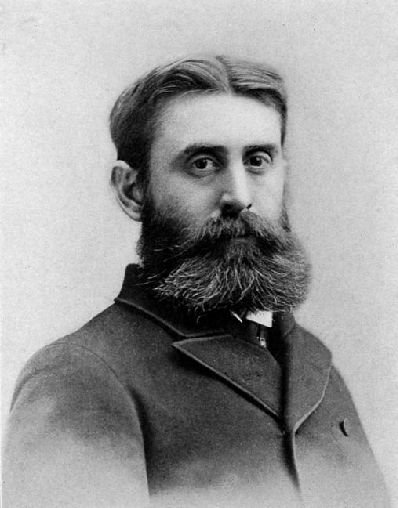
"Among the causes of the present appearance of restlessness with reference to the Westminster Standards, the first place is undoubtedly due to the overstrictness prevailing in some churches, in the formula of subscription which is required of office-bearers. And it is worthy of notice that where the formula seems overstrict, dissatisfaction seems to be most widespread, most pronounced, and most difficult to satisfy....In a word, a public confession [of faith], by virtue of the very fact that it is public, cannot be, and ought not to be pretended to be, just the expression of his faith which one accepts it as representing his faith would have framed had he only himself to consider. The most we can expect, and the most we have right to ask is, that each one may be able to recognize it as an expression of the system of truth which he believes. To go beyond this and seek to make each of a large body of signers accept the [Westminster] Confession in all its propositions as the profession of his personal belief, cannot fail to result in serious evils -- not least among which are the twin evils that, on the one hand, too strict subscription overreaches itself and becomes little better than no subscription; and, on the other, that it begets a spirit of petty, carping criticism which raises objection to forms of statement that in other circumstances would not appear objectionable.
Where the formulat of acceptance is such that no one signs without some mental reservation, some soon learn to sign without reference to mental reservation; and gross heterodoxy becomes gradually safe, because there is no one so wholly without sin that his conscience permits him to cast the first stone. That such a state of things has not been unknown, the history of Scottish Moderatism may teach us. That in the estimation of some, some of its features are not wholly unknown now, there are not lacking phenomena which may indicate....Now such a state of affairs is a great evil; and the dangers attending it have never been better pointed out than Dr. Charles Hodge, who writes: 'To adopt every proposition contained in the Westminster Confession and Catechisms is more than the vast majority of our ministers either do or can do. To make them profess to do it is a great sin. It hurts their consciences. It fosters a spirit of evasion and subterfuge. It forces them to take creeds in a non-natural sense. It at once vitiates and degrades. There are few greater evils connected with establishments than the overwhelming temptations which they offer to make men profess what they do not believe. Under such strict requirements, men make light of professions, and are ready to adopt any creed which opens the door to wealth of office. The overstrict the world over are the least faithful'
Not less surely, however, does overstrictness of formula wound tender consciences and produce a restlessness as over against the creed itself to all the propositions of which they are obliged to assent as the profession of their faith, even when they would not find these propositions objectionable when considered only as one statement of faith they profess. Tender consciences must revolt from a confession to which they are too closely bound, if they do not find themselves in absolute agreement with every word; and revolt once begun, battens on what it feeds on, until a great war breaks out against the Confession with which, nevertheless, most of the combatants are in substantial agreement. Thus, overstrictness in the formula is the real account often to be given of what emerges as objection against the creed, rather than against the formula. Relief is to be sought in such a relaxation of the formula as will give all the liberty to individuals which is consistent with the Church's witness to the truth. What is needed seems to us admirably expressed by Dr. Marshall Lang in a speech in the Established Presbytery of Glasgow, advocating the change of formula which has since been accomplished in that Church: 'The point they desired to emphasize was this,' he is reported as saying, 'that they did not bind men to the mere letter. They did not insist that a man should accept all the propositions and all the phraseology of the Confession. What they asked was that a man should honestly and truly subscribe to the system of truth that was presented in the Confession of Faith, and not merely to the words of the letter in which it was presented. He thought a substantial relief was given to persons of scrupulous conscience.' So far as the present agitation in the Scotch churches arises from this cause and tends to this result, it is an effort to attain a situation as over against the Standards which the American churches have always enjoyed, and it must have the hearty sympathy of every American Presbyterian.
This advocacy of a liberal formula, however, is not to be understood as if we could at all accord with those who would so relax the formula as to make the Confession of Faith little more than a venerable relic of a past age, still honored as such by the Church. Such a change as that made in 1816 by the Church of Holland by which ministers were not longer pledged to the Standards, because (quia), but only in so far as (quatenus) they accord with the Word, is justly pointed to...as fatal. That there are, nevertheless, some in the Scotch churches who might desire it, seems to be hinted by some words....Unfortunately, there are some even who act as if this were all that the present very strict formula bound them to, as was evinced, for example, by the amazing plea put in by Mr. James Stuart, author of that very remarkable book, The Principles of Christianity, when arraigned before the Presbytery of Edinburgh. Nevertheless, it is surely not so difficult as Principal David Brown expresses himself as thinking, to frame a formula which will 'let in all the right men and keep out all wrong'. The American churches have such a formula. Of course it lies in the courts of the Church to decide what is and what is not of the system, and Church courts are not infallible, nor always faithful. But Church courts can afford, and do venture, to hold men strictly to the terms of a liberal formula, when they could not to an illiberal one. Overstrictness demands and begets laxity in performance; while a truly liberal but conservative formula binds all essentially sound men together against laxity. In pleading for a liberal formula, therefore, we wish it distinctly understood that we do not plead either for a lax formula, or much less for a lax administration of any formula -- within which an essential dishonesty lurks. The American formula appears to us to be the ideal one, and as nothing more lax than it would be acceptable or safe, certainly a lax administration of it would be unendurable, and, as we have said, essentially dishonest."
("The Presbyterian Churches and the Westminster Confession," The Presbyterian Review, Vol. 10, No. 40, 1889, pp. 648ff.)
Reflections:
(1) Warfield's day was not unlike our own -- namely, the Reformed faith is (a) being discounted by those that want to so minimize the Confession to point where it becomes a 'mere Christianity and (b) being defended by those that desire to uphold a 'strict(er) subscription' to the Standards. And yet Warfield refuses to go down either of these roads (in good Old Princeton fashion).
(2) Warfield seems to recognize that these extreme positions [i.e. substance subscription and strict subscription] very much play off one another. I've long suspected this, so it's always nice when someone like Warfield agrees with you! When Confessional subscription is continually shoved down someone's throat in an overstrict way, it has the rather unintended consequence of making men even more apt to revolt against it. And when men start to drift away from the system of doctrine, it seems to make the Strict Confessionalists bang their 'overstrict' drum louder and louder. It's still worthy of note a century later "that where the (confessional) formula seems overstrict, dissatisfaction seems to be most widespread, most pronounced, and most difficult to satisfy." Indeed, things haven't changed all that much at all.
(3) The 'serious evils' that Warfield attributes to strict subscription are not imaginary. If you afford a man no place to issue scruples, it will invariably drive them underground. That's exactly what happened in the Free Church (Scotland) as well as the CRC (US). And if you haven't witnessed "a spirit of petty, carping criticism" over the Confession first hand in your Reformed church, then (a) you are extremely fortunate and (b) you should do your best to never leave!
(4) Warfield & Hodge show exactly how the main of conservative American Presbyterianism has practiced 'subscription'! Some today act as if this is some sort of a 'modern' view...when in fact it has a fairly long and established pedigree in American Presbyterianism.
(5) Warfield very boldly announces that because the Confession is public in nature, it cannot speak perfectly for the individual to his exact personal beliefs. Now there's something you don't hear too often today! I suspect because it sounds far too 'slippery' and leaves too many loose ends untied. But when you finally understand system subscription in its Old School Presbyterian sense, then you understand how Warfield can argue this way.
How does Warfield avoid the 'substance subscription' pitfall? We'll take that up in a subsequent post, based on the same article referenced above. Stay tuned....



 Posts
Posts

