He who hears the shema drinks the shekar!

Friday, March 7, 2008

Confessional Subscription....Redux

There have been all sorts of inquiries and studies into the relationship between the Continental Reformed (a la Calvin, Turretin, etc.) and Presbyterianism (Scotland/England). Underneath a broad consensus that one can see in the mainstream, the 'fine print' often reveals a different story....particularly as seen in matters of polity.

Leaving the often-discussed Sabbath issue aside, one issue in which there seems to be a pretty clear divergence in North America is the Reformed vs. Presbyterian approach to
confessional subscription.

If you want to understand the gist of this argument in its modern form, be sure to check out the very recent (and on-going) exchange between Lee Irons (defending
system subscription here and here) and Scott Clark (defending a stricter subscription here, here, and here) . Or if you prefer them in chronological order: one, two, three, four, and five.

Let me throw in my two cents:

(1) The Limits of Tradition --

North American Presbyterians have been arguing about this since the Adopting Act of 1729 -- it required men to "declare their agreement in, and approbation of" the Westminster standards but
also limited subscription to "all essential and necessary articles" of the Confession of Faith and catechisms. It's the Adopting Act's 'also' caveat that seems to make my Dutch friends cringe (not to mention Presbyterians who favor a more strict approach to the Confession), for as best as I can tell -- in my limited exposure to Dutch church history -- this is simply foreign from their way of receiving and adopting the Three Forms of Unity.

Despite the attempts made by Morton Smith and George Knight to show otherwise, the idea of a 'system subscription' in North American Presbyterianism is not a 'recent' development. In fact, it's not even a 'New School' development (c. 1860's). As John Fesko demonstrated quite thoroughly from the original sources in his 2003 JETS article, 'system subscription' has a firm pedigree that can be traced through the likes of Hodge, Warfield, Thornwell, Old Princeton, and all the way to Machen.
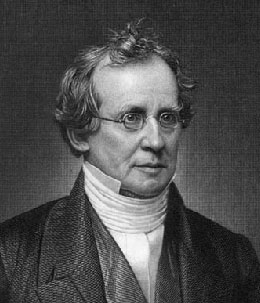

So what tradition are you going to go with? The Dutch way or the American Presbyterian/Old Princeton way? Here's a good example, I think, of why you need something more than 'tradition' to answer some of the thorny questions that exist amongst even the best mainstream Reformed thinkers.


(2) Defining our terms --

What do
Presbyterians mean by 'system subscription'? I'll let Charles Hodge do the talking:

Every minister at his ordination is required to declare that he adopts the Westminster Confession and Catechism, as containing the system of doctrine taught in the sacred Scriptures. There are three ways in which these words have been, and still are, interpreted. First, some understand them to mean that every proposition contained in the Confession of Faith is included in the profession made at ordination. Secondly, others say that they mean just what the words import. What is adopted is the 'system of doctrine.' The system of the Reformed Churches is a known and admitted scheme of doctrine, and that scheme, nothing more or less, we profess to adopt. The third view of the subject is, that by the system of doctrine contained in the Confession is meant the essential doctrines of Christianity and nothing more (Discussions in Church Polity, 1878, p.335-36)

Those are our basic three options: (a) strict, (b) system, and (c) substance (a term Hodge himself used elsewhere).


(3) Understanding our terms --

In discussing these options with my Dutch Reformed friends, it seems to me that they invaribly lump options (b) and (c) together. That is, the moment you depart from strict subscription, you're already on the road to dying a death of a million scruples. Options (b) and (c) are really nothing more than two shades of a vary similar looking grey! It frankly devolves into something looking indistinguishable form
slippery slope argument -- that is, system subscription invariably devolves into a substance subscription.


The problem (as with just about all slippery slope arguments) is that it fails to actually understand Old Princeton's Presbyterian rationale for holding to this 'middle' position between strict and substance views. Just like holding to a non-literal '6/24hr day' view of Genesis doesn't automatically mean you are giving up the narrative as a truly historical account, so also holding to system subscription (at least as understood by the likes of Hodge, Warfield, Machen, etc.) doesn't automatically entail making 'everything' in the Confession up for grabs.

This is simply a bad argument against system subscription. Just beacuse someone, somewhere misunderstands and/or abuses system subscription doesn't necessarily mean the thing itself (as understood by
good Presbyterians) is wrong.


(4) Does the stricter view really safeguard orthodoxy?

The main argument in favor of a stricter view seems to ultimately come to this -- it's defenders contend that it's the best way to
guard orthodoxy. There is a sense in which this is true -- system subscription leaves the door open to declare scruples on any number of things, some of which could easily be detrimental to the 'system' contained in the Westminster Standards. Allowing no scruples would certainly seem to solve that problem....or does it?

It seems to me that this is ultimately a practical argument (more than a theological argument), and the problem with 'practical' arguments is that they demonstrate mixed results. Sure, one could argue that examples abound (e.g., the PCUSA, Old-to-New Princeton, etc.) demonstrating the demise of 'system' approaches. But couldn't one also counter-argue that examples abound (e.g. the CRC, the Church of Scotland, etc.) demonstrating the demise of 'strict' approaches? In all of these examples, you had/have a plethora of other factors going on besides simply their views of subscription. And if our standard is simply which one guards orthodoxy the best, it seems to me (if we are
really going to be honest historically!) the results from the last 350 years or so at best reveal a mixed bag.

Another argument in favor of stricter subscription is that this is the only way to achieve and preserve true ecclesiastical unity. But Hodge paints a very different picture:

So far as we have been able to learn from the records, no man has ever been refused admission to the ministry in our Church, who honestly received "the system of doctrine" contained in the Westminster Confession, simply because there are propositions in the book to which he could not assent. And no Presbyterian minister has ever been suspended or deposed on any such ground. It is a perfectly notorious fact, that there are hundreds of ministers in our Church, and that there always have been such ministers, who do not receive all the propositions contained in the Confession of Faith and Catechisms. (The Church and Its Polity, 330)

In other words, hundreds of ministers scrupling certain words and propositions didn't seem to be a huge impediment to overall unity in the old-line Presbyterian church. It held up quite nicely for a number of generations.

So it puzzles me how a stricter view of the Confessions will result in a
more-unified church. Just ask Westminster grads trying to get licensed/ordained in the OPC over the last decade! It's not the 'system subscriptionists' who continually pick bones of contention about one's views on creation, the Law, the Sabbath, etc.

And is the 'young URC' any less devoid of controversy surrounding 'justification' and 'creation' than have been witnessed in the PCA and OPC? So I'm just not buying the 'provides greater unity' argument that strict subscription supposedly brings.


(5) Why then System Subscription?

Here's a Machen quote that will serve as a good starting point:

Subscription to the Westminster Standards in the Presbyterian Church of America [e.g. the precursor to the OPC] is not to every word in those Standards, but only to the system of doctrine which the Standards contain. (The Presbyterian Guardian, October 1936, pg. 45)

Not to
every word.....but only to the system of doctrine!
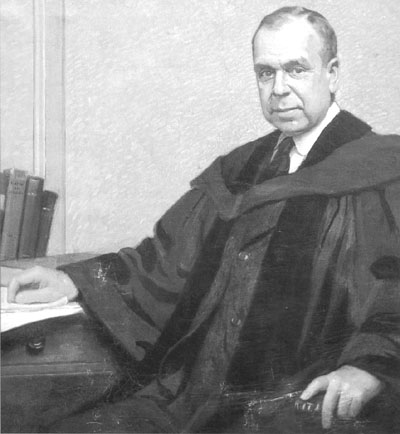

Machen's careful choice of language gives us a great pulse of the 'system subscription' argument, rightly argued and understood. Why not 'every word'? Hodge, Warfield, Machen, and others were all too aware that language like 'every'
attributes to words a certain 'plenary' status. But once you do that with respect to the Confession's words, how do I now distinguish a plenary view of the Confession's words and plenary verbal inspiration of Scripture's words?

In other words, Old Princeton system subscription took seriously the notion that "All synods or councils, since the apostles' times, whether general or particular,
may err; and many have erred. Therefore they are not to be made the rule of faith, or practice; but to be used as a help in both." (WCF 31.4). Machen might well have resonated with the Belgic Confession on this point: "Therefore we must not consider human writings-- no matter how holy their authors may have been-- equal to the divine writings; nor may we put custom, nor the majority, nor age, nor the passage of time or persons, nor councils, decrees, or official decisions above the truth of God, for truth is above everything else" (Article 7).

It seems to me that a Presbyterian's 2nd ordination vow (i.e. where we subscribe to "the system of doctrine as contained in the Westminster Standards") takes these Confessional qualifications cited here in Westminster and Belgic
more seriously. That is, we want our subscription practice to reflect the Confession's view of Scripture to the degree that we want to make absolutely clear the difference between our primary and secondary standards.

Of course, the strict subscriptionists plead again and again that their view of subscription does not equate Scripture and Confession. I understand and hear it loud and clear (and trust that most of you are 'right' in your own mind before God!)....but the answer sounds upon closer inspection like special pleading. I want to see more than simply an assertion that you distinguish your primary and secondary standards; I want to see
how you actually do it in your ecclesiastical practice. If I am never permitted to object to a certain word or phrase in a Confession, how is that in practice any different to never being able to object to a verse in Hosea or a phrase in Hebrews?

Or consider -- how does one
really and truly go about amending a Confessional standard in a strict-subscription demanding denomination? If (to use one strict subscriptionist's analogy) "Scripture is the house, then Confessions are the wall built around the house!", how could anyone in any ecclesiastical context really and truly ever make an argument from the Scripture without immediately running head-on into the 'wall around the house' that says, "Sorry, but the Confession is the standard of this house -- Goodbye!"? How would even an attempt to do so in an ecclesiastical forum not be met with that kind of Confessional door slamming?

As a Presbyterian, we actually have a
real example of the church amending her secondary standards! No, not the recent 1967 revision....but a much earlier one in 1788. After the Adopting Act in 1729 clarified 'some' of the things that might be scrupled relating to the civil magistrate in WCF 20 and 23, those items (as well sections in Chapt. 31 and WLC Q.109) were officially revised six decades later. In other words, you have a great case study here in drawing a direct connection between 'system subscription' in American Presbyterianism and the 'ecclesiastical ethos' it created, whereby the original 1647 version might be formally revised and amended. [And I trust that most of you reading this blog are probably not big fans of the civil magistrate calling synods and suppressing all blasphemies/heresies (per '1647 WCF' 23.2)!]

When I look at what the WCF confesses about Scripture in Chapter 1 and about synods in Chapter 31, I want a subscription practice that can actually do what it claims to confess, and not merely talk about doing it in theory. The irony here, of course, is that 'system subscription' is often caricatured as being 'anti-Confessional'....when in fact it's actually just the very opposite. Rightly-done 'system subscription' takes WCF 1.9-10 and 31.4 very seriously...and I would argue the most seriously of any of the 3 positions laid out by Hodge! This is not setting up the Scriptures against the Confessions...but rather setting up the Scriptures prior to the Confessions in authority.

That's the upshot of 'why' I'm a 'system subscription' Presbyterian!


(6) A Belgic 'test case'

Lee and Scott both mentioned the matter of Article 4 of the Belgic Confession, which mentions "the fourteen letters of Paul" (e.g. the usual '13' + Hebrews). It never really occurred to me before to ask how Article 4 of the Belgic is actually 'confessed' by those of you guys in the URC.

Honestly, what do you guys do here? I see only 3 options: (a) Do you scruple it? If you do, then how is that any different from 'system subscription'? The whole point of 'system subscription' would be to say something like, "Look, people disagree about the authorship of Hebrews; the essential point is confessing Hebrews as Scripture." (b) Do you really agree with Belgic on this point? or (c) Do you verbally (and theologically) confess to the whole of the 3 Forms down to every jot and tittle...but in your 'heart of hearts' really not believe that small part of the Confession?

Knowing many of you 'URC men'....(a) doesn't fit with your confessional views and (b) doesn't fit with what Steve Baugh, Dennis Johnson, or any other respectable NT scholar teaches today. So how do you then avoid (c) and 'crossing your fingers' when you confess the Three Forms as your confession? This would seem to undercut one of your main arguments against the 'system' view, if you can't even do in practice what you claim to do in theory!

This is why Lee's point about strict subscription's "repristinat[ing] every out-dated notion of 17th century of Reformed Orthodoxy" is not, it seems to me, off base at all. Lee certainly doesn't mean that it all has to go, but rather that we shouldn't be surprised if there are better ways to confess our theology, nor should we be shocked if there are some formulations worth changing. The idea that Paul wrote Hebrews may have been common place in the 16th and 17th century. But if your view of subscription can't even amend something as 'simple' as this, what does that tell you about your practice of subscription? That's the real dagger blow of Lee's argument -- not that strict subscription necessarily starts out with the expressed intent to 'live in the past' but rather that this method of confession doesn't afford it much opportunity to live anywhere else.

This is a small-yet-important test case...partly because it doesn't amount to a hill of beans theologically (apart from someone who insists on reading Paul into Hebrews at every turn, when he simply won't fit). But that's why it makes for an excellent point for discussion, since no serious doctrinal point is on the line. Why didn't the URC revise this when it formally chose to adopt the Three Forms? Did 'the majority' of the URC still believe Paul wrote Hebrews?

I'm not trying to be hopelessly myopic here. But then, my position doesn't require me to subscribe to every word of the Confession; your's does! So help me out here...


(7) Conclusion

It's worth pondering what the WCF means when it says synods and councils
"...are not to be made the rule of faith, or practice; but to be used as a help in both" (31.4). Not rule but guide! Why is it not the rule of faith and practice? Because only Scripture (cf. WCF 1.9 and 10) can rightly be said to do that. But such documents from synods and councils can and must serve as a guide in our faith and practice! That's the fine line that the WCF walks between 'traditionalism' on the one side and 'no creed but Christ' on the other! Consequently, we should embrace a subscription that walks the line between 'strict' on the one side and 'substance' on the other.

No approach to subscription (however strict!) is capable of guarding our faith and practice. When we try to make it do so, we inevitably end up asking it to do more than it adequately can. And that simply doesn't bode well for the life of the church, if our goal is to ultimately confess what we believe the Scriptures teach.

Defining Dysfunction!

I like James Grant's approach to pastoral counseling:


Finally....a satisfying definition of 'dysfunction'!

Saturday, March 1, 2008

Coarse Talking, Proverbial Wisdom, and What is Good

The Proverbs have a lot to say about human speech (using various metaphors of the tongue, mouth, etc.). For instance:

Prov. 12:14 - From the fruit of his mouth a man is satisfied with good, and the work of a man's hand comes back to him.

Prov. 13:2 - From the fruit of his mouth a man eats what is good, but the desire of the treacherous is for violence.

What's fascinating about the plethora of Proverbs addressing what we speak is that we are never given a list of words that are unacceptable, except as it pertains to profaning the 'name' of the Lord (cf. Prov. 30:9). In fact, nearly all the references to human speech in the Proverbs don't give you a lot of external specifics. It provides you external scenarios of bad and good speech, but the clear focus of the Proverbs is to get you contemplate the underlying motives involved in human speech.


Part of the problem it seems to me is that we approach Proverbs like we would the Mosaic Law, the later of which is replete with very specific instructions of what one should do and not do. Wisdom literature and the Law fit together under the broad umbrella known as the Mosaic Covenant (cf. 'Listen, my son' in Prov. 1:8 seems clearly intended to mirror the
shema of Deut. 6), but on a rhetorical level they communicate truth to us differently. That's part of why we designate the Proverbs as 'wisdom' literature -- if you read them expecting specific instructions (a la Leviticus or Deut.), you ironically end up gutting the very approach that Proverbs lays forth as how one might acquire wisdom. To a person who seeks a specific rule for every situation, there really isn't much need to acquire hokma!

Twice here in Proverbs 12 and 13, we find a connection between our mouths and simply what's good. No list -- the only category it gives is
tov!

I think this is helpful to keep in mind when thinking about speech, because it helps us realize that we need more than simply a 'list' of 'bad' words to avoid. If you start with an external list, then you easily put the cart before the horse, ethics prior to redemption, the imperative before the indicative.

Proverbs understands the subtlety and complexity that the language of communication involves -- which is why it addresses the tongue/mouth frequently -- and that's part of the real profundity of the Bible's so-called 'wisdom literature'. It's not just imparting moral slogans to follow, but it's providing us with a 'covenantal worldview' to evaluate *all* our speech. This goes well-beyond (while including in its evaluation) certain 'words' that might bring a perverse connotation.

For example, there is a time to answer a fool and a time NOT to answer a fool? (Prov. 26:4-5) How do you know the difference? Proverbs doesn't spell it out for you in 'how to' fashion -- "Here's when you do it; here's when you don't!." You simply don't get that. What it does spell out for you is the goal and need for *Biblical wisdom* in deciding the difference, and then providing numerous metaphors and parallelisms that help flesh that out.

This is crucial in evaluating our speech -- there are times when certain language is appropriate, times when it is not appropriate, times when it virtually never appropriate. But how do you know? When do parents talk to their children about topics like sex and drugs? How do parents talk to their children about course language without actually using the language itself? That's why you need 'wisdom' -- the ability to show skill in thinking through what you say with your lips.

I have a Christian friend who's an ADA, and he often has to read depositions and statements aloud in court that involve foul language. Is that wrong? For some, I think that would be a major conscience issue -- they would NOT want to answer such a fool according to his own folly! And so they should refrain from doing that. But for the prosecutor, he recognizes civil justice requires the confrontation of people's sinfulness -- 'answering a fool according to his own folly'....even if that means having to repeat the fool's language to the courts.

The difficulty is that this sounds (at least on the surface) a lot like situation ethics. But Fletcher's whole approach to situational ethics rules out any need for Biblical wisdom in making decisions -- I simply say what 'feels' right at any given moment. Biblical wisdom is nothing like that at all -- it recognizes that complexity of 'situations'...but then seeks to bring Biblical truth to bear in evaluating the situation. [Think of the old 'one meaning, many applications', if you will.]

In short, Wisdom recognizes the massive difference between dropping an 'f bomb' out of anger....and dropping an 'f bomb' while reading a transcript in the middle of prosecuting a major felon. This is not a totally arbitrary distinction based on autonomous thinking; rather, it is recognizing that 'wisdom' is rooted in our creation-ethics, for it is "he who made the earth by his power, who established the
world by his wisdom" (Jer. 10:15).

Stated pejoratively, Biblical wisdom in both Testaments is neither a friend to the Theonomist or autonomist. That's why it's called
Biblical wisdom!


That's also why the 'fear of the Lord' is so important when reading the Proverbs (e.g. 1:7)! We often gloss 'fear' in Proverbs with the idea of 'reverence'....which is not wrong per se, but doesn't really go far enough! John Murray gave, I think, a much more probing (and Biblically-satisfying) definition -- "The fear of God is the soul of godliness...The first thought of the godly man in every circumstance is God's relation to him and it, and his and its relationship to God." (Principles of Conduct, 229).

We have to constantly evaluate all our language -- not merely certain 'words' designated as offensive! -- in light of our relationship to God in Christ! And our standard cannot simply be whether 'it is bad'....but rather whether it is truly
good!

Is not that message we see Jesus preaching when confronted about the lawfulness of healing on the Sabbath? (Matt. 12:9-14) . How does Jesus confront their Pharisaical thinking? "It is lawful to do
good on the Sabbath." The answer sounds almost too simple....and yet it takes real skill when trying to evaluate what is good to do on the Lord's Day. No list could ever hope to accomplish all that is involved there.

Thankfully, Jesus gives us his own standard for evaluating what is good: And because of him
you are in Christ Jesus, who became to us wisdom from God, righteousness and sanctification and redemption, so that, as it is written, “Let the one who boasts, boast in the Lord." (I. Cor. 1:30-31). Not merely content to tell us to do good, Christ in the Gospel becomes wisdom for us!

Duking it out at the Altar!

It's funny what you find while Google searching for former classmates.

I was attempting to track down a friend of mine from Seminary, Daniel Sladek. While we were attending Westminter together, he somehow ended up traveling to the UK for a Free Church of Scotland summer internship, where he met a nice gal Scottish gal he would later marry. He's been hard to keep track of ever since. He did manage to write during his time at Free Church College a thesis on N.T. Wright's exegesis of the 'zdk language in the OT. The last I heard from him, he was ministering in some capacity (I think) at a Free Church congregation in the London area. But I can't recall communicating with him (much, if at all!) since I read his thesis, which must have been 5 years ago (at least!).

Enter Google!

The first Google search link I found and clicked on was your basic bulletin insert of the previously-mentioned London congregation, asking the congregation to pray for the Sladeks as he accepted a call to a church in Skye (Scotland). That was April 2006....so I figure I'm getting warmer.

I then tried to Google search the church name listed on the previous link, but it turned up nothing. I then went to the Free Church website, and they didn't have any church listed by that name. Dead end! So I decided to return back to my original search.

Now back at my initial search tab, I go to the next link of the original search and notice the following Google search blurb, "....American-born preacher Daniel Sladek, looked down from the pulpit..." So I'm thinking to myself that I've found him....

...And then I read for a little more context and discovered the title of the actual article in which Dan's name appeared:
Love rivals in punch-up at the altar and the subtitle: Jilted husband thumps wife's lover in Kirk.

[Leave to the Scottish to give you a real attention-grabbing headline! The only words that came to my mind were, "Scratch my back with a hacksaw!"]

Here's a fuller quote from the article:

The minister at the Kirk, American-born preacher Daniel Sladek, looked down from the pulpit in shock as his precentor (choirmaster) was beaten up.

He said last night: "We certainly deplore the incident and lament what happened. It was certainly a shock to myself and the congregation - a most unusual happening."


You can read the entire article here.

This has to qualify as one of the most bizarre ways to get back in touch with one of your Seminary friends -- finding a news headline about (a) your friend's church clear across the pond, in which (b) the choirmaster is a having an affair with a woman in the congregation, and (c) the choirmaster gets attacked by the husband of that woman
during the worship service in front of the entire congregation!

After reading this, I didn't know whether to cry or wind my watch (HT: Mike Lange).

It's hard not to find this humorous...until you realize how utterly tragic the whole affair must have been.

Monday, February 25, 2008

Muller's Post-Reformation Dogmatics

If you're looking for the best deal on Richard Muller's Post-Reformation Reformed Dogmatics (4 Vol.), Christian Book Distributor has it selling for $80 right now. However, if you use promo code "251485FF" during check out, that knocks off 10% of the price, which basically translates to 'free shipping.' Thus, you end up getting the entire set post-paid for $80.

If you don't want to shop at CBD, then the next best option for price appears to be over at Monergism Books -- $84.00 (with s & h).

This is not a blog typically devoted to Historical Theology -- there are plenty of those already out there. However, I wanted to mention this important work for investigating the development of Reformation theology among the post-Reformation Scholastics of the Reformed Faith.

Monday, February 11, 2008

Gott Proverbs?

Norman K. Gottwald argued nearly 50 years ago that the Hebrew Proverbs are "generally mediocre as literature, tedious as ethics, banal as religion" (A Light to the Nations, New York: Harper, 1959: 472). For someone who was quite critical of the historical-critical school, it's remarkable how little Gottwald's sociological models and ethnographic parallels -- seen chiefly in his 'peasant revolt' theory of Israel's origins -- move us beyond what the critical school had been saying for decades prior.

Thankfully, numerous studies in 'Wisdom literature' more recently have demonstrated how woefully wrong Gottwald is on all three accounts. Raymond van Leeuwen's Context and Meaning in Proverbs 25-27 should be required-reading for anyone trying to work their way through Proverbs' poetic skill, rhetorical subtleties, and theological acumen. Bruce Waltke's recent commentary on Proverbs works this out in even greater detail.

Friday, February 8, 2008

Lost in Translation(s)??

Alan Jacobs has an interesting review (2005) of Robert Alter's The Five Books of Moses: A Translation with Commentary that touches on a key issue related to modern Bible translations that has long bothered me.

Typically, the debates in evangelical translation philosophy get reduced to a continuum between (1) 'literal where possible' (e.g. the NASB) on one end and (2) 'loose paraphrase' (e.g. the Living Bible or The Message) on the other, with (3) the other 'dynamic equivalence' translations falling somewhere in between.

Because option (1) is recognizably difficult whenever you translate from any language into another, option (2) has become the
status quo for most evangelicals and option (3) continues to gain momentum in a lot of circles. But have the new translations really produced a better text? Jacobs argues (echoing Alter) that a big part of the problem in all three of these options (particularly 2 and 3!) is that they frequently fail to do justice to the literary form of the original text in their translation philosophy.

Of course, not all of the literary features of either Greek or Hebrew will easily translate into English (and hence the reason why Option 1 relies on a sometimes-overly-wooden approach to translation). However, Jacobs argues that translators too quickly 'give in' to this translational divide by 'smoothing out' those literary features of the original languages. How? By devoting far too much attention towards producing something readable
in English, and failing to really wrestle with the original. And in so doing, the literary artifice of the original text gets 'lost in translation'!

Alter explains:

The assumption of most modern translators has been that this sort of [Hebrew verbal] syntax will be either unintelligible or at least alienating to the modern readers, and so should be entire rearranged as modern English. There are two basic problems with this procedure. First, it ignores the fact that parataxis [two or more syntactic units connected without use of a conjunction] is the essential literary vehicle of biblical narrative: it is the way the ancient Hebrew writers saw the world, linked events in it, artfully ordered it, and narrated it, and one gets a very different world if their syntax is jettisoned. Second, rejection of biblical parataxis presupposes a very simplistic notion of what constitutes modern literary English (Preface, pg. xxiv).

Jacobs' review highlights just a few of the numerous examples brought out by Alter in the historical-prose sections of the Old Testament, where English translations routinely 'over-interpret' or 'over-stylize' the text in places where the text is
deliberately ambiguous or deliberately (and at times, monotonously!) repetitive. Why does this happen? I suspect because our definitions of Biblical perspicuity, while necessary to our theological commitments, don't have enough literary elasticity to account for things like ambiguity (or monotony) in a text. Even the Westminster Confession admits that "all things in Scripture are not alike plain in themselves" (1.7), but I wonder how many committed to the Westminster Standards would be equally willing to say that certain texts (particularly OT historical texts) are purposely ambiguous due to their literary style?!?!? I suspect that sounds far too radical a proposal for many, if not most.

Alter (on a few occasions) calls this ironing out of textual ambiguity the "the heresy of explanation"...and just about all of the modern translations fall into this 'heresy' at some point or another. What does Alter propose as a necessary corrective?

"A suitable English version should avoid at all costs the modern abomination of elegant synonymous variation, for the literary prose of the Bible turns everywhere on significant repetition, not variation. Similarly the translation of terms on the basis of immediate context -- except when it becomes grotesque to do otherwise -- is to be resisted....Finally, the mesmerizing effect of these ancient stories will scarcely be conveyed if they are not rendered in cadenced English prose that at least in some ways corresponds to the powerful cadences of the Hebrew (xxxii).

Alter is likely guilty of overstating his case here -- do we really want to say that these modern translations 'scarcely' convey the Biblical narrative's intent? Nevertheless, I think the basic criticism is valid and worth pondering in lieu of the translations that roll out on an almost-yearly basis. The roughly 50 page introduction should be read by anyone doing work in the Hebrew Old Testament translation, whether as Hebrew scholar or a pastor.

I'd be curious to if there is a "Robert Alter counterpart" writing in the area of Greek narrative style. Steve Baugh made an off-the-cuff comment to me about 4 or 5 years ago, that (if I remember right!) he was learning to appreciate more and more how Greek narrative style was far more informed by Hebrew narrative style than many of the standard Greek grammarians will ever admit to (particularly as it relates to Septuagint renderings of the Hebrew text) ....but I can't say that I've seen much research explored in this area.

Many reading this blog already will be familiar with Alter's classic texts on Hebrew narrative and poetry; these are 'must reads' (with discernment, of course), if you are working through any of those portions of the OT.
If you are preaching through the Pentateuch, The Five Books of Moses is a treasure chest of translational nuggets! I haven't had a chance to review his most recent work on translating the Psalms, but I can only imagine it will prove an excellent resource.

Wednesday, January 30, 2008

More taxes, anyone?


My three-word summary of the political landscape in 2008: image over ideas.

Of course, this could probably be said about most political elections since the flourishing of news and television media outlets over the last half century. Sure, the Lincoln-Douglas debates (the so-called 'roots' of today's Presidential debates) in 1858 had its fair share of rhetorical flair, but there was always a since in which there were real ideas and methodological commitments behind the rhetoric. Today, one is constantly bombarded with 60 seconds here-90 seconds there to answer a question....which, of course, only encourages more 'political spin' without ever
really discussing anything at all.

Remember teary-eyed Hillary in Iowa a month or so ago? Or more recently, the 'hand-shaking incident' with Ted Kennedy during the State of the Union address? TV outlets (from Fox to CNN) ran gang-busters with this. But what do either of these incidents
really have to do with the issues that the average America? It might as well be Tony Romo and Jessica Simpson that we're talking about, where the media goes out of its way to cover an issue by stating: "We, the media, should leave this one alone...because it really has nothing to do with Romo's poor performance in the playoffs." What's the real difference here? National issues get reduced to the level of 'sporting event' event tabloids.

[
NB: Admittedly, I didn't follow the campaign trail to the elections of 2000 and 2004 terribly closely -- in the case of the former, I was finishing seminary and working in a Santa Barbara (internship); in the case of the later, I was preparing for and traveling to Canada. In neither case was I able to watch television due to the poor television reception in Escondido. So I've probably seen more political coverage (i.e. 'sound bites') this time around than the previous two combined....and we still have another 9+ months of this to go!]

The internet has plenty of pitfalls in the area of mis-information. But (surprise, surprise!) I'm starting to think that number-crunching articles, Q&A's that actually answer substantial questions, etc., may end up the better medium for cutting through so much of the 'spin' that takes place on television newscasts and 30-second advertisements.

The reason I'm voting for Ron Paul next week can frankly be summed up in one word:
economics. All the so-called polls say the economy is now the #1 issue for most voters in America, even more than the Iraq War. The problem is that these same people that are so concerned about the economy don't understand the economics of government taxation.

The National Taxpayers Union Federation (NTUF) issued a statement this week analyzing President Bush's recent State of the Union address, and conclude that it amounts to a $134.6 Billion-dollar spending increase from 2007, the largest single increase of his 8 year term. Weren't the Republicans suppose be the party of
less government spending?

The NTUF also issued another report analyzing the various budget proposals of the various candidates running for the President in 2008, showing that more spending is likely on the horizon. Increases from the various candidates include:

Huckabee: +$54.2 Billion
Romney: +$19.5 Billion
McCain: +6.9 Billion

Isn't McCain suppose to be the more 'moderate' of the three? Then there are the Democratic front-runners:

Obama: +$287.0 Billion
Hillary: +218.2 Billion

This is one of the reason I'm not really buying the '
compassionate Obama persona' that a lot of people (including a number of conservatives) seem attracted to. When it comes to government spending, Obama is as 'big government' as they come.

There was only one (remaining) candidate that scored in the negative category:

Ron Paul: -$150.1 Billion

As stated in one of my previous posts, the GOP simply doesn't understand what to do with Ron Paul. Could it be because they have become so accustomed to big-spending that someone like Paul actually sounds like a 'radical'? In fact, Paul is the only candidate that I really trust who says he wants 'change' and actually has a voting record to back up
real change.

Monday, January 7, 2008

Changes Around BeritOlam!

After thinking over the general content of this blog, I've decided to pull an Andrew Compton...and set up a separate blog here.

I'm not exactly sure yet how I'm going to organize things between the two, but in my mind I have the thought to post general commentary, photos, and personal updates at the 'other' site, while keeping this site focussed more on matters related to my academic interests in Old Testament, the Hebrew Bible, and theology (with, of course, some New Testament thrown in too!). You can think of it as '2 Kingdom' blogging (if you must), but I of course reserve the right to confuse these two kingdoms as I see fit!

I also thought this would be an interesting way to see the 'ins and outs' of Blogger vs. Wordpress, two of the more popular blogging sites out there. I actually reserved both of these sites when I initially started blogging about a year ago, but I decided to go with Blogger because of its simple navigation for 'Blogging 101'...and of course it connected to a Google account rather nicely. Of course, a lot has changed since this time last year(!!!). Giving your blog a free 'face lift' seems a whole lot easier in January '08 than January '07; it certainly appears that Blogger and Wordpress provide a plethora of 'free account' options and add-ons that I don't particularly recall from a year ago. [It could be that I simply didn't know what I was doing a year ago, though I still wonder how much more I know a year later!]

I have a number of ideas for 2008 in terms of posting content....so stick around to find out.

Sunday, December 30, 2007

Power Politics


Two recent blog posts highlight for me the complexity and frustration with the 2008 election.

Lee Irons comments on the matter of executive power:

It’s disappointing that so few Republicans seem to care [about it] , but traditionally conservatives have been the ones upholding the Constitution, limiting presidential power, and defending civil liberties and the rule of law.

One place you really see this is the way Ron Paul gets treated by the Republican establishment. Just read a few pro-Republican pundits, and you'll see it soon enough. Paul is usually dismissed rather quickly under the conservative rhetoric that he is anti-American, anti-military, anti-War on terror, or (the
really popular one) just too radical in his politics to be a true Republican.

Such 'radical' remarks about Paul actually tell you more about the political machine than Paul himself. Paul's message is frankly very simple -- it is
pro-free market, pro-Constitution, and anti-government across the board. In other words, Paul is just too libertarian for the big-government ideology on the 'left'...and the increasingly big-government agenda on the 'right'! A great example of this is the way Republican diehards criticize Paul's consistent opposition to the Iraqi occupation. Note the way Paul gets lumped in with the leftist, anti-war machine; for some reason, it never really occurs to these people that Paul's rationale has absolutely nothing to do with leftist politics. His rationale for opposing Iraq (as far as I can tell) is: (a) we're involved in a prolonged conflict that really amounts to an unconstitutional 'war' and (b) it's costing the country billions of dollars to fund it.

The reason why Paul's message sounds too radical for people is because we've become too accustomed to letting big government run our lives...and that goes for Democrats and Republicans.

A great example of the 'big government' establishment surfaced in the aftermath of the Bhutto assassination. Kim Riddlebarger was particularly 'disgusted' with the way the candidates from both sides of the fence handled themselves:

Is anyone else as as disgusted as I am at all the presidential campaigns for using the tragic assassination of Benazir Bhutto as a way to shamelessly tout their own supposed foreign policy credentials?

These guys (and a gal) have spent the last two days knocking each other over to get before a camera or a mic to pontificate about something they obviously know very little about. Unless you are already in the White House and privy to hard intelligence, you probably don't know squat about what really happened and who did the dastardly deed....

And we wonder why less than 50% of Americans vote? The cynicism shown by the lot of them is disgusting to me. And just why is it that we are going through this eleven months before the election?

As Riddlebarger remarks, Paul's response makes the most sense --
"We should mind our own business and stay out of supporting military dictators." No political spin....and (more importantly!) just good economics. And yet again, Paul gets blasted by the 'neocons' for being anti-American and anti-military because Paul is critical of American foreign policy.

I don't agree with
everything Paul says, but his message has a near-brutal consistency to it that is very appealing.....and no one in either party likes it.